The Strategic Value of the Stack of Books SVG in Modern Branding and Design
In the contemporary landscape of digital asset creation and brand identity, visual metaphors play a pivotal role in communicating complex ideas instantly. Among the myriad of graphical elements available to designers, educators, and marketers, the Stack of Books SVG has emerged as a particularly potent symbol. This is not merely a decorative clipart; it is a versatile vector graphic that encapsulates themes of knowledge, accumulation, creativity, and structured learning. When executed with high-quality design principles—such as the vibrant, retro-inspired aesthetic often seen in modern educational merchandise—the stack of books becomes more than an icon; it becomes a statement of personality and purpose.
For professionals ranging from freelance illustrators to corporate marketing teams, understanding the nuance of such assets is crucial. The ability to leverage a well-designed Stack of Books SVG can elevate a product line, enhance user interface experiences, or simply add a touch of whimsy to professional communications. This article explores the deeper implications of this design element, examining its relevance across various industries and why it resonates so strongly with today’s audience.
Deconstructing the Visual Language: A Retro Revival
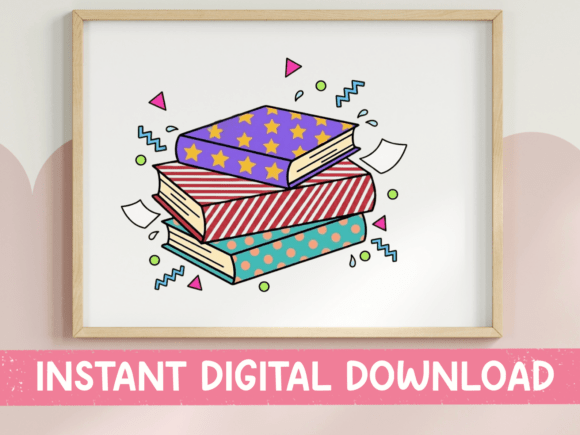
To appreciate the utility of the Stack of Books SVG, one must first analyze its composition. Consider a specific, highly effective iteration: three stacked books with bold, colorful covers piled high. The top book features a purple cover adorned with gold stars, signaling excellence and achievement. The middle book boasts a red and pink candy stripe pattern, evoking nostalgia and playfulness. The base is a teal foundation covered in yellow polka dots, providing stability while maintaining visual interest. Surrounding this central structure are colorful retro confetti triangles and small paper scraps, scattering around the stack to give the whole scene a back-to-school energy that is genuinely fun.
This specific design choice is not accidental. It taps into the broader trend of "Neo-Retro" aesthetics, where past decades—particularly the 1970s and 1980s—are reinterpreted through a modern lens. The use of bright, saturated colors like teal, purple, and hot pink creates a high-contrast visual hierarchy that grabs attention in crowded digital feeds. For entrepreneurs and creators, this style offers a distinct advantage: it stands out against the minimalist, monochromatic trends that have dominated tech interfaces for the last decade. By incorporating these playful elements, brands can humanize their message, making them appear more approachable and engaging.
The Psychology of Color and Shape
The psychological impact of the colors used in this Stack of Books SVG cannot be overstated. Purple is traditionally associated with wisdom, luxury, and creativity. Gold stars reinforce the idea of reward and success, which is particularly effective in educational contexts. Red and pink stimulate excitement and passion, while teal offers a calming, balanced counterpoint. Yellow, often linked to optimism and clarity, serves as an accent that draws the eye to the details.
Furthermore, the geometric shapes—triangles, circles, and stripes—create a sense of dynamic movement. Unlike static, flat illustrations, the scattered confetti and paper scraps suggest action and celebration. This is vital for marketers looking to convey energy and enthusiasm. Whether the context is a teacher’s gift, a student’s notebook, or a library promotional campaign, the visual language speaks directly to emotions of joy, discovery, and intellectual curiosity.
Market Relevance and Industry Applications
The demand for high-quality, thematic SVGs like the Stack of Books SVG is driven by several converging market trends. One of the most significant is the rise of the creator economy and the print-on-demand (POD) industry. As more individuals launch businesses selling physical goods, the need for scalable, high-resolution digital assets has never been higher. SVG (Scalable Vector Graphics) files are the preferred format for this purpose because they can be resized infinitely without losing quality, ensuring crisp prints on everything from small tote bags to large wall murals.
- Educational Merchandise: Teachers and school administrators are constantly seeking unique ways to celebrate their profession. A Stack of Books SVG with its vibrant, celebratory design is perfect for t-shirts, mugs, and notebooks. It allows educators to express pride in their field without resorting to clichéd imagery.
- Bookstore and Library Branding: Independent bookstores and public libraries are competing for community engagement. Using this design on signage, social media graphics, and loyalty cards helps create a cohesive, inviting brand identity that appeals to both children and adults.
- Digital Content Creation: Bloggers, YouTubers, and podcasters who focus on literature, education, or self-improvement often use this graphic as a thumbnail element or logo component. Its bold colors ensure visibility at small sizes, which is critical for mobile users.
Consumer Preferences and Lifestyle Trends
Modern consumers, particularly Millennials and Gen Z, value authenticity and personalization. They are drawn to products that reflect their interests and identities. The description of the Stack of Books SVG notes that it is made for "book lovers, students, librarians, and anyone who considers a well-stocked shelf a personality trait." This resonates deeply with a demographic that views reading not just as a hobby, but as a core component of their self-concept.
This shift in consumer behavior has led to a surge in "niche" branding. Instead of generic stock images, businesses are opting for designs that speak directly to specific subcultures. The retro confetti and candy stripe patterns appeal to those who appreciate vintage aesthetics, while the clear subject matter (books) ensures the design remains accessible. This balance between stylistic specificity and universal recognition is key to commercial success.
Technical Advantages of SVG in Workflow Efficiency
From a technical standpoint, the adoption of the Stack of Books SVG streamlines workflows for designers and developers. Unlike raster images (JPEG, PNG), SVGs are XML-based, meaning they are lightweight and code-friendly. This makes them ideal for web development, where page load speed is a critical factor for SEO and user experience. An SVG version of this colorful stack will load almost instantaneously, regardless of the device being used.
Moreover, SVGs offer unparalleled editability. Designers can easily swap out the purple cover for blue, change the polka dots to stripes, or adjust the opacity of the confetti to match a brand’s color palette. This flexibility is invaluable for agencies managing multiple client projects. It reduces production time and allows for rapid prototyping, enabling teams to test different visual directions quickly and efficiently.
Integration with Modern Design Tools
The compatibility of SVGs with popular design software such as Adobe Illustrator, Figma, and Canva further enhances their utility. These tools allow for seamless integration of the Stack of Books SVG into larger compositions. For instance, a marketer might combine the book stack with typography to create a back-to-school sale banner, or pair it with icons representing different subjects to create an infographic. The vector nature of the file ensures that all elements remain sharp and aligned, maintaining professional standards across all output formats.
Conclusion: Embracing the Symbol of Knowledge
The Stack of Books SVG represents more than just a collection of illustrated volumes; it is a multifaceted design asset that bridges the gap between nostalgia and modernity. Its vibrant colors, playful patterns, and symbolic weight make it an excellent choice for a wide range of applications, from educational materials to lifestyle products. As the market continues to evolve towards more personalized and visually engaging content, assets that combine strong aesthetic appeal with functional versatility will remain in high demand.
For professionals and creators, leveraging this graphic is not just about adding decoration; it is about communicating values. It signals a commitment to learning, a celebration of creativity, and an appreciation for the tangible joy of books. By integrating such thoughtful design elements into their work, businesses and individuals can forge stronger connections with their audiences, turning simple interactions into memorable experiences. In a world increasingly dominated by digital ephemera, the enduring power of the book stack reminds us of the lasting value of knowledge and the artistry involved in sharing it.